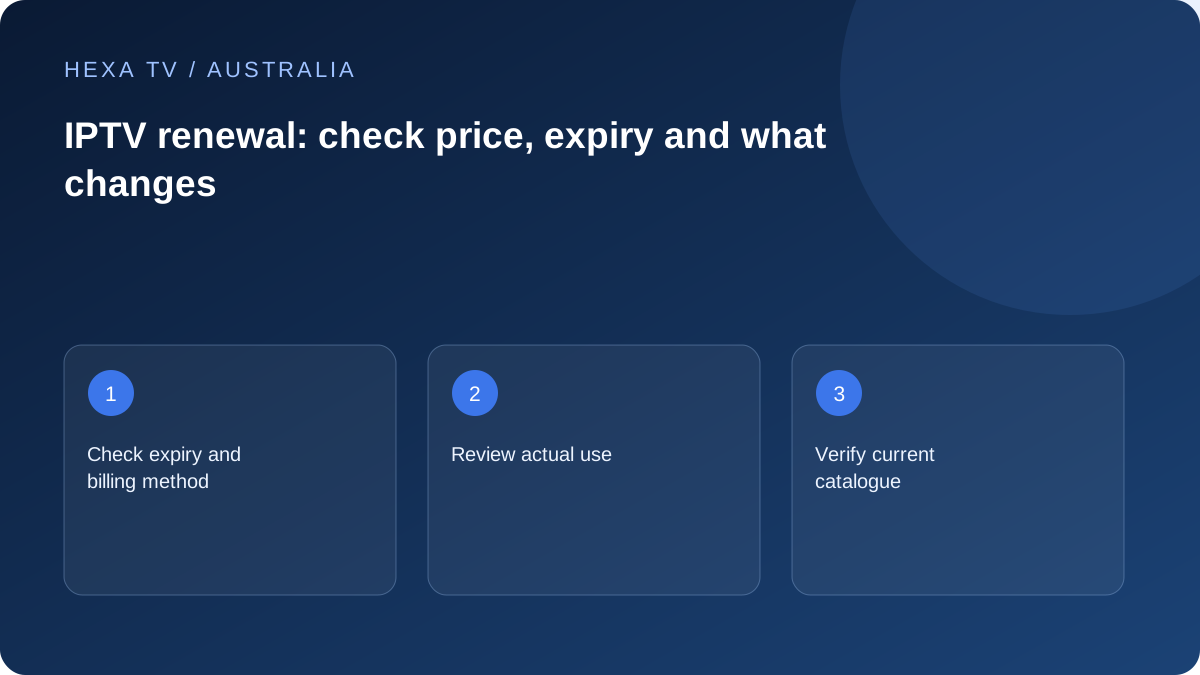
Check which term is ending
The provider subscription and player licence can have different expiry dates. Identify the account asking for renewal and the payment mechanism involved.
If a stream stops near expiry, check account status before erasing a previously working television setup.
Review what the Australian household used
Compare actual viewing with the original essentials list. Include official broadcaster apps and other subscriptions when deciding whether another paid term adds enough value.
Recount simultaneous sessions and recheck the required device. A change in viewing habits or app support can make last year's plan unsuitable.
Request a current, complete quote
The renewal should state duration, streams, currency, total and when the new term starts. Ask whether unused time is carried forward instead of assuming it.
Check the current EUR total, screen allowance and renewal terms before payment. Selecting a plan does not itself extend an existing account; the renewal arrangement and verified payment status matter.
Identify the term and product being renewed
An IPTV content account, a player licence and a broadcaster account can have different commercial arrangements. Read the specific order or account record and note its expiry. A message from one app is not proof that every part of the household setup needs another payment.
Find out whether the current agreement uses manual renewal or an automatic process. Do not infer that mechanism from the presence of a saved card or a reminder email. Use the service's own confirmed terms and account state, and keep the date of access expiry separate from any payment or processing date.
Review the Australian household's actual use
Count simultaneous viewing rather than installed devices. Identify the programmes that justified the last term and whether they are still needed. A household that watched only during a short competition has a different renewal decision from one using the service throughout the year.
Include the official broadcaster apps and any terrestrial route already meeting part of the need. The paid subscription should be evaluated for the additional benefit it supplies, not credited for every programme the household watches through unrelated services.
| Question | Evidence to use | Decision it informs |
|---|---|---|
| How many streams were needed together? | Ordinary concurrent use | Appropriate screen allowance |
| Which programmes remain essential? | Current title or event list | Catalogue verification for the next term |
| Did every planned device work? | Actual model and app results | Compatibility before another commitment |
| Were there unused periods? | Household viewing calendar | Short versus long duration |
| What remains unresolved? | Support records and observed limitations | Whether renewal solves anything relevant |
| What is the new total? | Current approved local quote | Complete cost comparison |
Compare local quotes without inventing an exchange rate
HexaTV prices and payments are in euros, not Australian dollars. Do not apply an assumed exchange rate and present the result as a fixed AUD renewal charge. Check the current EUR total and payment schedule before making a decision.
For a neutral arithmetic example, suppose a fictional A$15 monthly option and A$140 annual option covered the same verified need. Twelve monthly payments would total A$180, while the annual commitment would be A$140. That comparison is meaningful only for a household intending to use the full year and accepting the longer commitment. The numbers are illustrative, not offers.
Include costs outside the headline term
A separately charged player, necessary streaming device or overlapping subscription can change the total. Include only costs genuinely required for the proposed setup, and avoid counting equipment already owned as a new purchase unless replacement is needed.
Distinguish an annual amount divided by twelve from a monthly billing arrangement. A low monthly equivalent does not tell the household when money is due. Confirm any relevant taxes, renewal changes and account conditions from the current offer rather than carrying forward an old promotional screenshot.
Ask how the new term affects existing access
Before placing another order, clarify whether renewal extends the existing account, begins immediately or creates new access details. If time remains on the current term, ask how it is treated. Do not assume two orders combine automatically.
Keep the non-secret order reference and the current expiry available for the private support conversation. If a payment outcome is unclear, resolve that state before paying again. A second transaction is not a reliable test of whether the first one activated the intended term.
Verify the confirmed account state and essential use
After the service confirms renewal, check the displayed or supplied expiry, screen allowance and supported credentials. Play a small set of the household's currently entitled essentials and inspect the controls that matter, including accessibility and normal remote operation.
If only one programme remains faulty, preserve the account confirmation and investigate that source separately. A commercial extension and a technical repair are different outcomes. Do not treat a successful payment as evidence that an unresolved device, catalogue or network problem has disappeared.
Keep a clear record for the next decision
Store the confirmed offer, payment record, term dates and any unresolved limitations privately. A short household note can explain the chosen duration and screen allowance without exposing credentials. That makes the next renewal a review of actual needs rather than a reconstruction from old messages.
If you decide not to continue, use the service's documented process and retain its confirmation where applicable. Remove obsolete access from shared devices through supported controls when appropriate. An official broadcaster app or other existing route may still meet the remaining need without another long commitment.