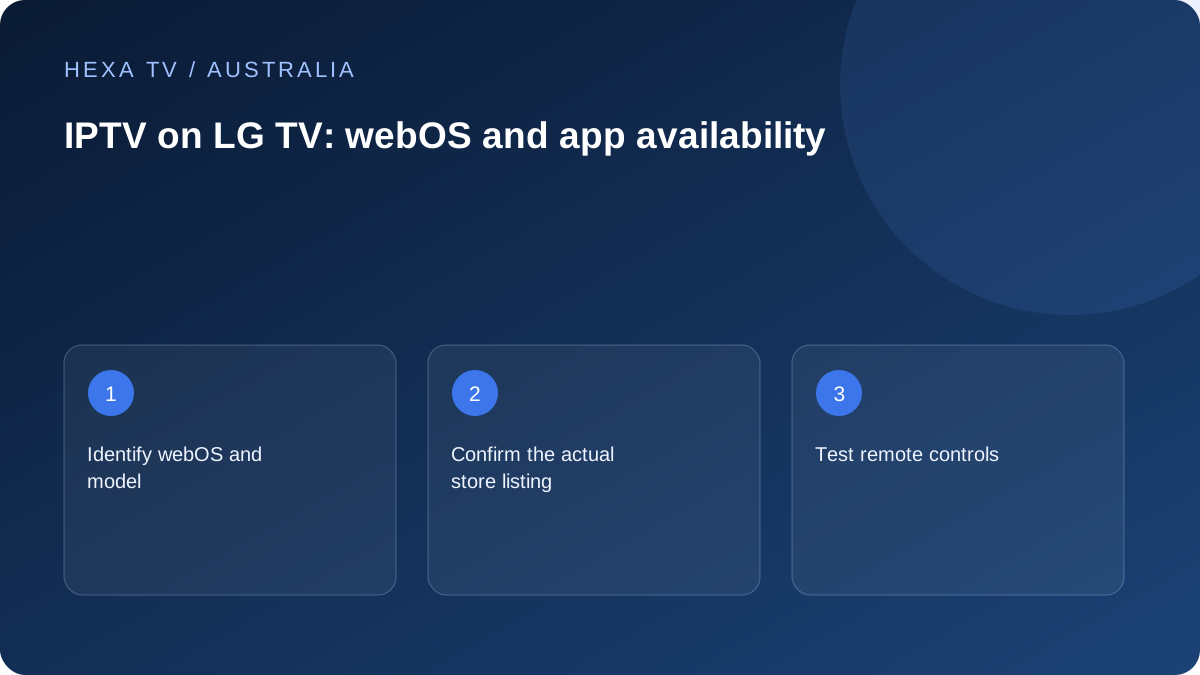
Check the webOS generation and region
Use the full LG model and system version in the compatibility check. Follow LG's current store and account instructions for the genuine Australian setup.
A similarly named app on another model-year television is only a lead to investigate. Verify the publisher-supported player on the actual screen.
Try the controls the viewer will use
Test with directional buttons as well as a pointer where available. Find favourites, open the guide and change a subtitle track on content that supplies one.
An app that needs awkward navigation can be unsuitable for the household even when video decodes. Record that practical issue rather than counting installation alone as success.
Retain a recovery path
Before removing a player, note the account method and any locally stored favourites. Store credentials privately and find the publisher's supported restore or transfer route.
If the app cannot be installed, assess a compatible external device through the TV's input. Do not keep changing the service-country setting to force an unsupported path.
Identify the actual webOS environment
Find the full model code and current system version, then check the player publisher's television requirements. A successful installation on another LG generation is not enough to establish the same result.
Use the genuine Australian service-country and account context. If a required app is unavailable, ask for a supported route instead of changing region to force a listing whose content and compatibility may differ.
Inspect the software purchase before the content setup
Read the app's licence or paid-feature information and identify the publisher. A player activation may be separate from the content provider's term. Keep those charges and recovery processes distinct.
Only add the content account after the player opens. Use the documented login type and protect the supplied endpoint and credentials. Verify account acceptance, catalogue load and an available source as separate milestones.
Test the actual LG remote method
Some viewers prefer directional controls even when a pointer is available. Try favourites, guide movement and track selection with the control style the person will use.
Check focus, text size and access to back or exit controls from the normal seat. A technically working app can remain impractical if important actions are hard to reach. Record the obstacle rather than assuming more catalogue organisation will fix it.
A webOS support record without secrets
Keep this note for the household and relevant official support route; private account values belong elsewhere.
| Field | Useful content |
|---|---|
| Television | Full model and webOS version |
| Player | Publisher, installed version and supported listing |
| Control | Pointer or directional routine used |
| Playback | Specific source, track and observed failure |
| Connection | TV network path and viewing location |
| Scope | One app, one source or wider interface |
| Maintenance | Action taken and what it removed |
| Time | Local Australian date and timezone |
Use memory warnings as evidence, not a guess
LG publishes guidance about memory notices and applications that will not run. If that wording appears, preserve it and identify whether several applications are affected.
Do not assume that every buffering event means storage is full. Check the television's own information and the actual trigger. A source missing from a provider catalogue or an expired account is a different issue from a device memory warning.
Plan before clearing data
Identify which account configuration, favourites or recordings are stored locally and what the proposed maintenance action removes. Cache, app data and uninstall controls can have different effects.
Save the current versions and original trigger. Use a supported private recovery method before deleting configuration. A reinstall that produces a new login issue has not yet resolved the original playback problem.
Compare connectivity at the television
Record the TV's active connection and the room layout. If supported, a safe temporary cable can remove the wireless hop from one comparison while keeping the source and player unchanged.
A mobile hotspot is another possible comparison only within its allowance and permitted use, and it changes more of the internet path. Label that difference. A working alternate path does not independently certify every component of the TV or prove the retail provider caused the earlier fault.
Keep the household's Australian services visible
Check the current official device guidance for ABC iview, SBS On Demand and any other broadcaster app the household uses. Support for one app does not establish support for the whole set.
If an external device is proposed because the native player is unavailable, verify those other requirements too. Include the extra remote, input switching and sound route in the decision rather than comparing only the box price.
Repeat the exact failed task after a change
If the guide crashed, reopen the same guide path. If one source lacked sound, use the same source and output. A different programme succeeding is useful information but not proof that the original issue is fixed.
When the symptom does not recur, report that limitation rather than invent a permanent repair. Keep the previous working settings and the dated sequence of changes.
Finish with a practical recovery route
Document how to open the player, find favourites and return to ordinary television. Keep a non-secret provider reference and the app publisher's support route alongside the model information.
The article is a model-aware checklist, not a claim of hands-on LG testing. HexaTV prices and payments are in euros. A verified subscription catalogue remains a separate question from the television's software support.